Overview
Payments, Fintechs, Exchanges, Wallets, Agents
Interstellar ensures that no critical digital action — transaction, agent delegation, smart-contract call, account recovery — is executed unless a human has cryptographically approved that exact action, even when the device is compromised.
Specifically, we can generate a cryptographic proof of the human intention at the exact time of execution.
Proof of Human Intent (PoHI) can be applied to anything from blockchain transactions to critical agent delegations and beyond.
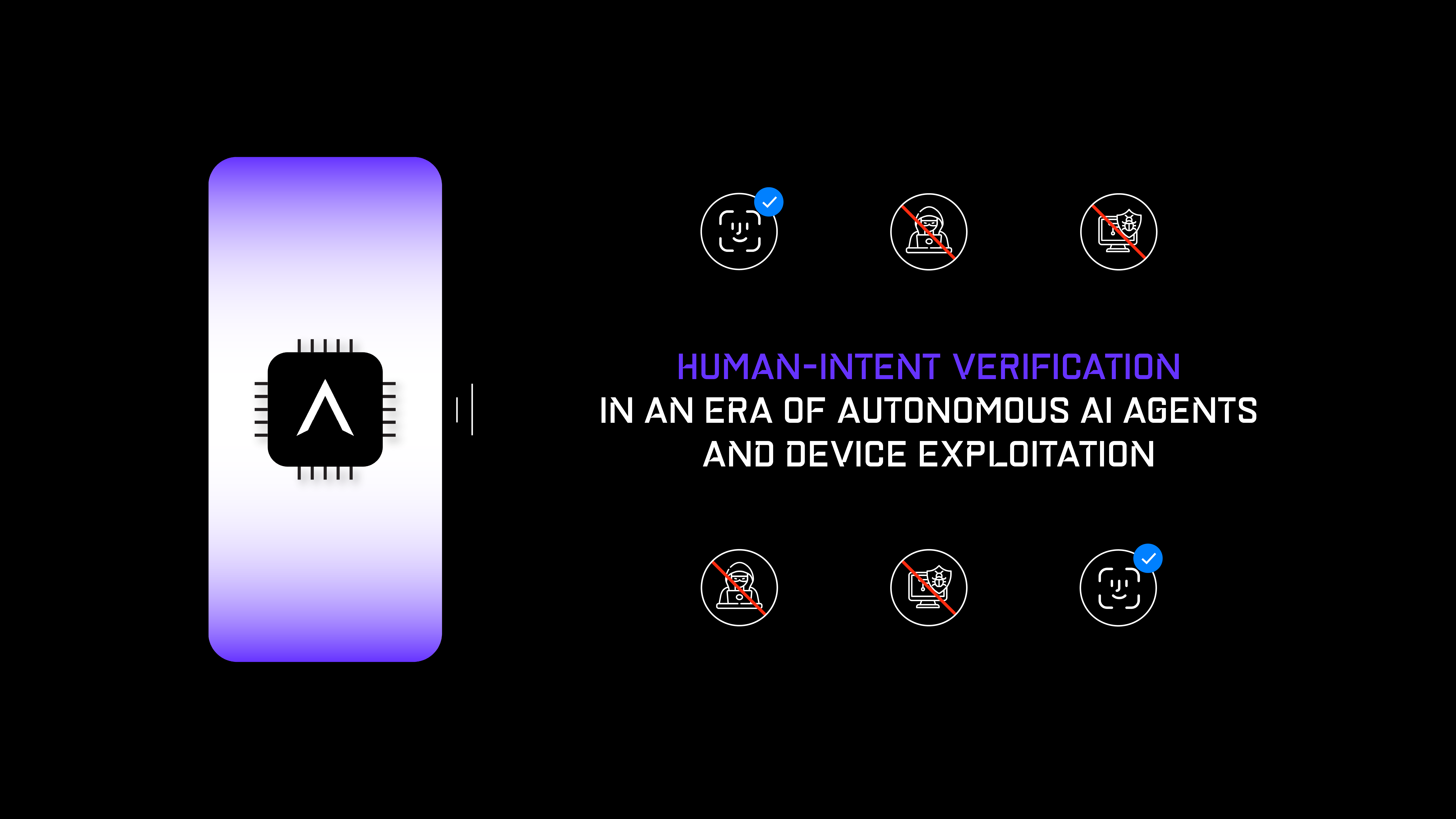
Authentication ≠ Intent
Malware and AI agents now act after login — draining wallets and triggering irreversible payments while security still trusts the authenticated session:
- Overlay attacks mean the user “confirms” one thing, the system executes another
- Instant settlement (Web3, real-time payments) means there is no rollback window
- Existing MFAs, biometrics, and passkeys all assume: “If the device is authenticated, the action is legitimate.”
Proof of Human Intent
The Human Intent Gateway: A new trust layer that binds a specific action to a human validation and produces a cryptographic proof that malware and AI cannot fake:
- Secure Intent Screen that overlay attacks cannot silently alter
- Short Cognitive Interaction only a human can solve — embedded into the screen
- Proof of Execution — exact action at a given time is verified by a decentralized signer network
Learn More
- Threat Model — what PoHI stops after login
- Dynamic Visual Cryptography — how the secure visual channel works
- Visual Simulation — try it yourself
- Garbled Circuits — the cryptographic foundation